Kenya just secured a massive financial lifeline that could reshape its entire digital landscape. In a move confirmed by the World Bank, the East African nation is set to receive $390 million over the next three years to overhaul its digital infrastructure. That figure translates to roughly KES 50.3 billion, a sum intended to bridge the gap between rural connectivity needs and modern economic demands. Reporting by Citizen TV Kenya on March 3, 2026, highlights this commitment, but the headline isn't just about the money—it's about the urgency.
Here's the thing: while the credit facility was approved back in March 2023, actual movement has been frustratingly slow. As of early March 2026, only 6% of those funds have actually been dispersed. That delay matters because every day spent waiting is another day communities remain offline, businesses struggle with latency, and schools lack access to digital learning tools. The clock is ticking toward a 2028 deadline, putting pressure on stakeholders to accelerate deployment before the window closes.
The Scope of the Digital Overhaul
So what exactly will this cash do? It isn't just a general pot of money for anything digital. The funding is structured under the Kenya Digital Economy Acceleration Project, a dedicated framework designed to standardize how fiber networks operate across the country. Tim Kelly, the lead digital specialist for the World Bank in Nairobi, explained that the goal is to support an open fiber data standard. Essentially, this means breaking down silos so different providers can share infrastructure securely.
The infrastructure component alone is valued at just over $200 million. Within that budget, approximately $100 million is earmarked to add 27,000 kilometers of fiber to Kenya's backbone network. Think of this as building the superhighways of the internet. Then there's the final mile—the tricky part where cables actually reach the end-user. An additional $65 million is committed specifically for last-mile connectivity. This ensures internet access reaches essential services like schools, hospitals, police stations, and government offices. It's about making sure the signal doesn't stop at the city limits.
Implementation Bottlenecks and Challenges
But wait, why is the rollout moving at a crawl? According to the latest reports, implementation has stalled despite the clear need. Jimmy Bogo, Reporter for Citizen TV Kenya, noted the discrepancy between approval and execution. While the bank intends to disburse the remaining funds before the 2028 deadline, the current pace suggests administrative hurdles or procurement delays are holding things up.
This isn't isolated to the digital sector either. Kenya faces a documented infrastructure financing deficit estimated at $2.1 billion annually. Sustained expenditures of almost $4 billion per year are required just to meet current needs, yet public resources fall short due to high debt levels. With public debt standing at 57 percent of GDP, relying solely on government coffers is impossible. The World Bank is aware of this constraint, which is why they are pushing for models that attract private capital rather than just state spending.
Broader Economic Context and PPPs
The approach being taken mirrors previous successful interventions. The World Bank Group previously provided $90 million to kick-start Kenya's public-private partnership (PPP) programs. That injection resulted in a new PPP law and a stronger government capacity to manage these complex deals. More recently, the International Development Association provided a $40 million loan in 2012 to establish the legal framework, followed by another $50 million in 2017 to support local projects.
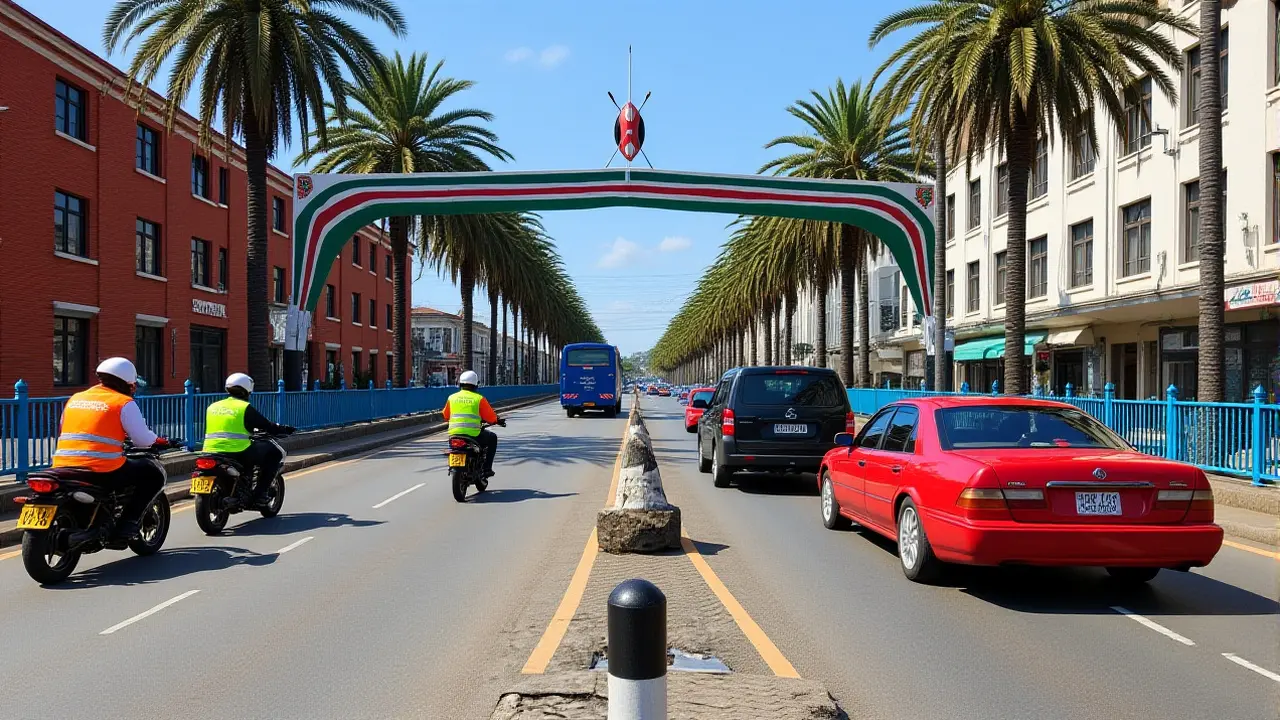
Looking at the bigger picture, institutions like the International Finance Corporation and the Multilateral Investment Guarantee Agency have engaged bidders for the Nairobi-Nakuru-Mau Summit Highway. This road project is a trade corridor vital to East and Central Africa. An estimated $10.4 billion in private investments is expected to be mobilized for early PPP projects including student housing, health, water, and sanitation sectors. The logic is simple: build the trust and capacity, then the market follows.
What Lies Ahead for Investors
As we head into 2026 and beyond, the focus shifts to capital market vehicles. The World Bank is providing technical assistance to help local institutional investors get comfortable investing in infrastructure using local currency. This moves away from total reliance on foreign exchange. For investors, this signals a maturing market where infrastructure assets become viable investment classes similar to bonds or equities.
Frequently Asked Questions
How much of the funding has been used so far?
As of early March 2026, only 6% of the approved $390 million credit facility has been dispersed. This indicates a significant lag between approval and implementation despite the project starting in 2023.
What specific infrastructure will the money build?
The funds target two main areas: creating 27,000 kilometers of new fiber backbone network and establishing last-mile connectivity. Priority zones include schools, hospitals, police stations, and general government service delivery points.
Who is leading the project oversight?
Tim Kelly serves as the lead digital specialist for the World Bank in Nairobi. He confirms the bank's intention to disburse remaining funds before the 2028 deadline to ensure the digital economy accelerates as planned.
Why is private investment needed alongside World Bank funds?
Kenya faces a $2.1 billion annual infrastructure deficit. Public debt is high at 57% of GDP, so public resources alone cannot cover the cost. Private investment, estimated at $10.4 billion for early projects, fills this gap sustainably.
When was the original funding approved?
The $390 million World Bank credit facility was originally approved in March 2023. However, the actual disbursement reporting became public on March 3, 2026, revealing the slower-than-expected progress timeline.



M Ganesan
March 27, 2026 AT 18:55The whole narrative feels suspicious given the history of corruption scandals in similar projects. Nobody wants to acknowledge that the funds might vanish before hitting the ground. It is typical for these massive allocations to result in little more than paperwork. Local communities are left waiting while politicians sign off on useless contracts. We demand transparency and accountability for every single dollar spent. Trust is already broken so skepticism is the only rational stance available. They talk about urgency but deliver delays instead of results.
Aman kumar singh
March 28, 2026 AT 00:31Hope everything gets fixed soon.
pradeep raj
March 28, 2026 AT 08:30We must consider the multifaceted nature of these digital interventions when analyzing the broader economic context. The allocation of resources represents a significant commitment by international bodies. However, the pace of implementation creates a bottleneck that could hamper progress significantly. Infrastructure projects require sustained attention from stakeholders across all sectors. The gap between approval and execution highlights potential administrative inefficiencies within the system. We cannot ignore the fact that rural connectivity remains a critical unaddressed need in many areas. Schools and hospitals are waiting for essential tools to function at peak capacity. The delay impacts the learning outcomes for children in remote regions disproportionately. Economic growth is tightly linked to the availability of reliable high-speed internet access. Public debt levels constrain the ability of local governments to fill the funding gaps independently. Private sector participation becomes necessary to sustain the momentum of these large-scale initiatives. Without active collaboration, the potential benefits remain theoretical rather than practical realities. Regulatory frameworks must evolve to support the influx of new capital into the market ecosystem. The standardization of fiber data opens doors for shared infrastructure opportunities. Stakeholders must remain vigilant until the final deployment milestones are achieved successfully.
Crystal Zárifa
March 28, 2026 AT 20:37Another day another billion promised to us by the global north elites. It is funny how they think money fixes all structural rot instantly. The fiber cables are pretty but they do not feed anyone directly. We have seen this movie play out dozens of times across Africa without real change. Just watching the show unfold is enough for now honestly.
Serena May
March 29, 2026 AT 23:44This is disappointing news 😢 We need actual action not words 👎👎💔
Vishala Vemulapadu
March 31, 2026 AT 20:46You can calculate the ROI easily using the standard models provided in the report. The deficit is real but the solution involves basic arithmetic. Private investment fills the void where public funds fall short. Data centers are the priority for economic yield right now. Connectivity means business continuity in a modern world economy.
James Otundo
April 1, 2026 AT 01:07Your analysis lacks depth and ignores the nuances of fiscal policy at a sovereign level. Only those trained in macroeconomics understand the weight of debt servicing costs here. It is unfortunate when public discourse reduces complex financial instruments to soundbites. True understanding requires reading the primary documents from the bank. The average citizen misses the bigger picture entirely.
nithin shetty
April 1, 2026 AT 16:57The fundis is stll low and we need more claryfi on the dates. Six percent is too small for such a big project timeline. The delay hurts everyone in the rural zones especially. Hope they fix the admin procees faster next year. Transparency is key for trust building in these deals.
Jason Davis
April 2, 2026 AT 08:22Infrastructure is the key to growht in emerging markets like this one. Delays often stem from procurement rules that are overly cautious. Technical teams need more autonomy to move things along quickly. Fiber backbones take time but planning should start earlier. We see progress eventually if the political will holds firm.
ankur Rawat
April 3, 2026 AT 07:13I thnk this is going to bbe amzing for schools and hospitols. The netwrks need a boost and this cash helps alot. Last mile conneivity is the hardest part though always. Colors of change are coming to the villages soon. Hope the roads also get upgraded with teh cables.
Vraj Shah
April 3, 2026 AT 23:38i hoppe they finish fast.
UMESH joshi
April 4, 2026 AT 21:44Patient observation of the project lifecycle is necessary for true evaluation. The process is long and requires careful management of expectations. Stakeholders benefit from clear communication channels during the deployment phase. Everyone wants success but time is a critical factor in delivery. Continued support from the community aids in smoother implementation overall.
Jullien Marie Plantinos
April 6, 2026 AT 10:12This! Is! Terrible!!!! Why! Are! They! Wasting! Time!!!!!!
Cheryl Jonah
April 8, 2026 AT 05:12They are setting up tracking systems under the guise of digital upgrade projects. Big corporations own the fiber routes once laid down. The world bank knows exactly what they are doing with the data. People should read between the lines on ownership rights. Surveillance is the real product being built here.