A coordinated wave of security alerts has hit the international community, as the UK Foreign, Commonwealth & Development Office (FCDO), the US State Department, and the Canadian Government have all issued urgent warnings against traveling to Nigeria. The updated advisories, peaking in April 2026, paint a grim picture of a nation grappling with systemic terrorism, rampant kidnapping for ransom, and violent crime. For many Western citizens, the message is clear: staying away is the only safe bet.
Here's the thing: this isn't just a general "be careful" notice. These are high-level restrictions that could actually void your travel insurance if you decide to ignore them. While some cities like Lagos and Calabar are treated with slightly more leniency, the vast majority of the country is now considered a high-risk zone.
A Map of Danger: High-Risk Zones and "Do Not Travel" Areas
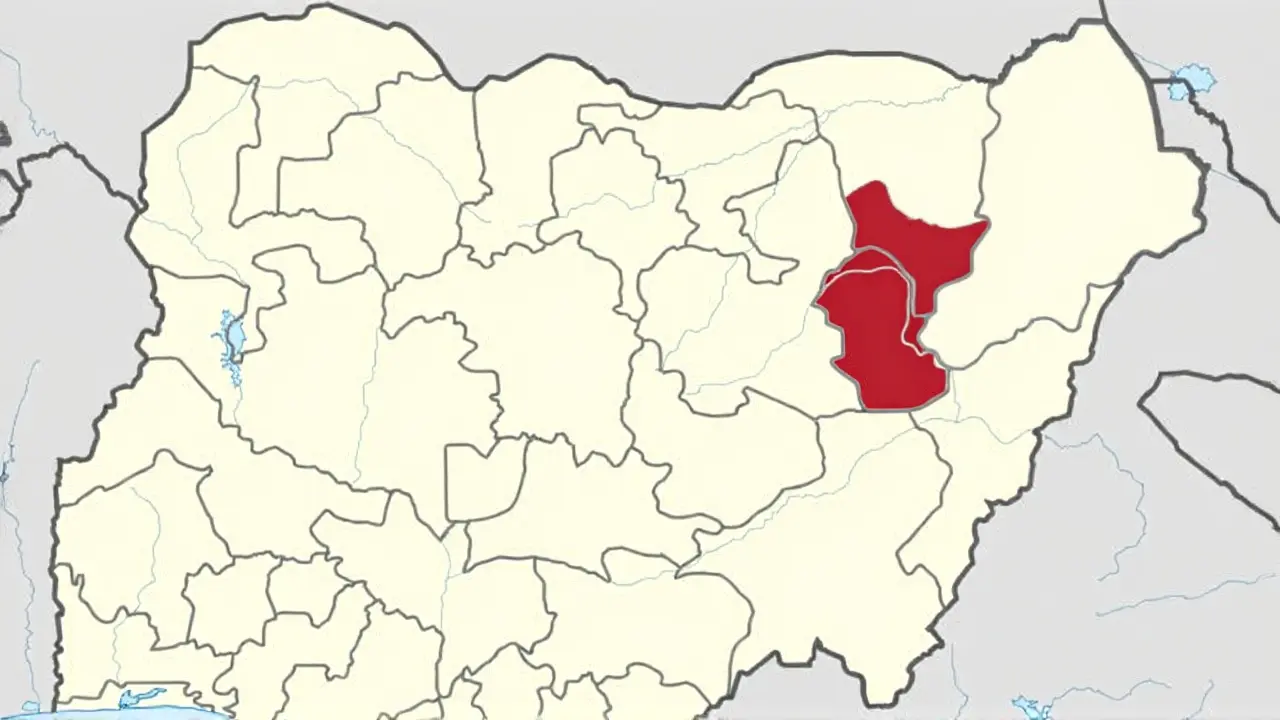
The breakdown of the risks is starkly regional. In Northern Nigeria, the situation is particularly volatile. The UK FCDO, in an update on April 1, 2026, explicitly advised against all travel to Borno State, Yobe State, Adamawa State, and Gombe State. If you're looking at the North West, Katsina State and Zamfara State are similarly off-limits.
But it doesn't stop there. The US State Department's Level 3 "Reconsider Travel" advisory, which remains active through 2026, lists a massive array of "Do Not Travel" zones. Beyond the northern terror hotspots, the US warns against visiting Abia, Anambra, Bayelsa, Delta, Enugu, Imo, and Rivers states (though Port Harcourt is a slight exception). In these southern regions, the threat shifts from insurgent terrorism to organized crime and armed gangs.
Interestingly, the Canadian government's advisory from April 2, 2026, mirrors these concerns but highlights the riverine areas—the swamps and waterways accessible only by boat—as particularly perilous. In these corridors, the risk of ambush is incredibly high.
The Twin Threats: Terrorism and Kidnapping
Why is the alarm so high right now? Turns out, the nature of the threats is evolving. Terrorists are no longer just sticking to remote forests; they're collaborating with local gangs to expand their reach into urban centers. The US State Department warns that attacks can happen with zero warning at malls, hotels, restaurants, and even schools.
Then there's the kidnapping crisis. This isn't just opportunistic crime; it's a business model. Kidnapping for ransom has become a widespread industry, and foreign nationals are prime targets because of their perceived wealth. The UK FCDO noted that British citizens, in particular, have been targeted by criminals who view them as high-value assets.
The ripple effect of this insecurity is felt on the roads. While urban carjackings are frequent, rural roads are described as "especially dangerous." For anyone attempting to move between cities, the risk of being intercepted by armed gunmen is a constant, terrifying reality.
Healthcare Gaps and Entry Hurdles
It's not just about violence; the infrastructure is struggling too. US officials warn that medical facilities in Nigeria generally don't meet Western standards. A major red flag is the prevalence of counterfeit pharmaceuticals, which makes treating even simple ailments a gamble. Furthermore, the healthcare system is largely "cash-and-carry," meaning most hospitals demand immediate payment and won't touch US health insurance.
For those who still intend to travel, the paperwork is a hurdle. A valid visa is mandatory, and a yellow fever vaccination certificate is a non-negotiable requirement for entry (unless you're an infant under 8 months or over 61). Travelers also have to navigate the Nigeria Health Declaration Form, an online requirement that's part of the government's attempt to track public health threats through thermal screening and travel history checks.
Expert Advice for the Brave or Necessary Traveler
If your job or family forces you to go, the advice from the US State Department and FCDO is to essentially become invisible. That means: keep a low profile, vary your routes so you aren't predictable, and for heaven's sake, leave the expensive watch and jewelry at home.
Security experts suggest a few critical rules of thumb:
- Avoid night travel: The cover of darkness is when most ambushes occur.
- Don't resist: If you're robbed, the consensus is to not physically resist. Your life is worth more than your phone.
- Carry ID: Always have your passport and visa on you, but keep your cash amounts small.
The bottom line is that the risk is no longer confined to "the north." Whether it's a gang in the Delta or an insurgent in Borno, the security landscape is fractured and unpredictable.
Frequently Asked Questions
Which parts of Nigeria are currently considered the most dangerous?
The most critical areas include the North East (Borno, Yobe, Adamawa, and Gombe) and the North West (Katsina and Zamfara) due to terrorism. Additionally, the riverine areas of Delta, Bayelsa, Rivers, Akwa Ibom, and Cross River are extremely high-risk due to piracy and armed gangs.
Are there any cities in Nigeria that are safe for non-essential travel?
The Canadian government's advisory specifically excludes Lagos and Calabar from its "avoid non-essential travel" recommendation. However, travelers to these cities are still urged to exercise a high degree of caution, as violent crime can occur anywhere.
How does traveling against government advice affect my insurance?
The UK FCDO explicitly warns that travel insurance may be invalidated if you visit a region where they have advised against all travel. This means if you are kidnapped or injured in a "Do Not Travel" zone, your provider might refuse to cover evacuation or medical costs.
What health precautions are mandatory for entering Nigeria?
A yellow fever vaccination certificate is required for almost all adults and children. Additionally, travelers must complete an online Nigeria Health Declaration Form and be prepared for thermal screening upon arrival to detect potential public health threats.
What should I do if I'm a US citizen needing emergency assistance in Nigeria?
US citizens can contact the State Department's 24/7 Task Force at +1-202-501-4444 from abroad or 1-888-407-4747 within the US and Canada. For local emergencies, the Nigerian police can be reached by dialing 112 or 119.



Senthilkumar Vedagiri
April 12, 2026 AT 04:50Oh sure, "security alerts" lol. Its so convenient how all three goverments suddenly lapped up the same narrative at the same time. Wake up people, this is just about controlling movement and probably some resource grab in the Delta. They want us scared so we dont ask why they're really there. Totaly scripted behavior by the globalists to isolate the region. Just a bunch of lies to keep the sheep in line 🙄
Kartik Shetty
April 13, 2026 AT 19:10One must consider the geopolitical nuances here. The preoccupation with safety is merely a superficial layer for the deeper systemic failure of the post-colonial state. It is quite elementary really. Most people lack the intellectual depth to see the socioeconomic stratification causing this. Truly a banal observation to just call it "dangerous" without analyzing the structural decay
Priyank Prakash
April 14, 2026 AT 13:02Omg this is literally a horror movie plot!! 😱 imagine just going for a meal and then BAM, kidnapped for a business model. This is absolutely insane!! I can't even look at the map without shaking. Why is the world like this?? Someone please tell me it's all a prank because this is too much drama for my brain to handle today 😭
Sathyavathi S
April 15, 2026 AT 06:53Actually, everyone needs to realize that the riverine areas have been a nightmare for years. I read this obscure report once that explained how the mangroves provide perfect cover for these gangs. It's not just "danger," it's a strategic failure of the naval patrols. Honestly, the fact that anyone is surprised by this in 2026 is just embarrassing. Like, do people not read the news or just the headlines? It's obvious that the urban centers are just as risky now because the gangs are moving in. I've seen videos of the traffic in Lagos and it's a goldmine for carjackers. Seriously, the lack of awareness is staggering!
Arun Prasath
April 15, 2026 AT 20:32It is imperative to note that the yellow fever certificate is strictly enforced at the border. I would also suggest that those traveling for business utilize accredited security firms for airport-to-hotel transfers to mitigate risk.
Mel Alm
April 15, 2026 AT 22:50thats so scarry... hope evryone stays safe out there
Ashish Gupta
April 16, 2026 AT 20:12Stay safe everyone! 🛡️ Always trust your gut and keep your loved ones informed! You got this! 💪✨
saravanan saran
April 18, 2026 AT 07:32It is a tragedy when a land of such rich cultural heritage becomes synonymous with fear. We should look at the human cost beyond the warnings. Peace is rarely found in a government decree, but in the hearts of the people living through it.
Pranav nair
April 19, 2026 AT 08:06Really sad to see the state of things there... (sigh)
shrishti bharuka
April 21, 2026 AT 01:37Oh great, so just a casual stroll to the mall might get me kidnapped as a "high-value asset." What a lovely vacation spot. I'm sure the insurance companies are just thrilled to have another excuse to not pay out. Truly a wonderful time for global travel.
Nikita Roy
April 21, 2026 AT 06:42just stay positive and be careful i think things will get better soon
Jivika Mahal
April 23, 2026 AT 02:50I realy think we should help each other out with travel tips if we have to go thier! No one should feel alone in such a scary situashun. Let's share more about the safe spots in Lagos if we know any!
Suman Rida
April 23, 2026 AT 03:11It is best to simply follow the official guidelines. Safety should always be the priority over curiosity.
Priya Menon
April 23, 2026 AT 11:35The disparity between the safety of the capital and the rural provinces is absolutely abhorrent and completely unacceptable. It is an utter disgrace that the international community can only offer "warnings" while the local population suffers under this chaotic regime. The failure of the state to provide basic security is a systemic collapse that demands immediate global condemnation. I find it repulsive that Westerners are told to "become invisible" instead of the government being pressured to actually fix the instability. This is not a travel issue, it is a human rights catastrophe of the highest order. The fact that kidnapping is a "business model" is a sickening indictment of the entire socioeconomic structure. I am disgusted by the complacency of those who see this as just another travel advisory. We are talking about the erasure of safety in an entire region. The incompetence is breathtaking. This is not just "volatile," it is a failure of governance that borders on the criminal. I will not stand by and call this a "grim picture" when it is actually a hellscape for those without a passport to escape. Absolute failure across the board.
sachin sharma
April 24, 2026 AT 11:44Keeping a low profile is definitely the way to go. Just stay chill and stay safe.