When Donald Trump returned to the White House in January 2025, few expected the speed with which he would dismantle norms once considered inviolable. But by mid-year, it was clear: this wasn’t just another administration pushing boundaries. It was a systematic unraveling — of independent courts, of press freedoms, of the quiet agreements that held American democracy together. And while Americans watched in disbelief, across the Atlantic, leaders in Europe and Britain began asking a quiet, urgent question: What if this is our moment?
The Unraveling Begins
It started with the Justice Department. In March 2025, Trump directed federal prosecutors to drop investigations into three senior allies accused of election interference — all of them, coincidentally, campaign donors. Then came the executive order redefining "domestic extremism" to include peaceful protest groups that had criticized his policies. By May, the FBI had been ordered to cease monitoring far-right militias unless they threatened federal property. The chilling effect was immediate. Journalists reported being barred from press briefings. Whistleblower hotlines vanished from government websites. By June, Transparency International downgraded the U.S. from "flawed democracy" to "hybrid regime" — the first such fall since the 1970s.
What made it worse was the silence. Not from the opposition — they screamed. But from institutions that should have stood firm. The Supreme Court declined to hear three cases challenging the erosion of voting rights. Senate Republicans refused to call witnesses. Even the National Archives stopped publishing daily logs of presidential actions. It wasn’t chaos. It was calculated.
Europe and Britain See Their Chance
While the U.S. turned inward, Europe didn’t just watch — it repositioned. In July, the European Commission unveiled a $1.2 billion "Democratic Resilience Initiative," targeting tech platforms, media literacy programs, and independent courts in Eastern Europe. Germany pledged €200 million to support investigative journalism in Hungary and Poland. France quietly revived its Cold War-era intelligence-sharing pact with Britain, bypassing Washington entirely.
And then came Britain. In a move that stunned diplomats, Prime Minister Keir Starmer announced in August that the UK would no longer automatically align with U.S. sanctions unless they were approved by the UN Security Council. The statement, delivered in the House of Commons, was terse: "We will not be complicit in the erosion of global norms." Within weeks, the UK signed a landmark data-sharing agreement with the EU on law enforcement — something it had blocked for years after Brexit. The message was clear: America’s decline is not Europe’s problem — but it is its opportunity.
Who’s Talking About It?
Journalist Jonathan Freedland captured the mood in his July 2025 article for The New Yorker, where he wrote: "Trump is abandoning democracy and freedom. That creates an opening for Europe — and Britain." The piece, now more than five months old as of December 2025, became a rallying cry in Brussels and Westminster. In a related podcast episode on Apple Podcasts, Freedland interviewed Susan Glasser, a longtime The New Yorker staff writer, who warned: "This isn’t about Trump. It’s about what happens when the guardrails come off — and no one’s left to fix them."
Both Freedland and Glasser are part of a growing cohort of transatlantic commentators who argue that the U.S. is no longer the default anchor of liberal democracy. Instead, they say, the vacuum is being filled — not by authoritarianism, but by quiet, pragmatic realignment. Countries like Canada, Australia, and Japan are watching closely. But Europe and Britain are acting.
The Ripple Effect
Already, the shift is visible in trade. The EU has begun negotiating a digital services tax with Britain — one that excludes U.S. tech giants. NATO’s command structure is quietly being restructured to reduce reliance on U.S. intelligence hubs. Even the World Health Organization has moved its emergency coordination center from Washington to Geneva. These aren’t grand declarations. They’re slow, deliberate moves — the kind that don’t make headlines but rewrite alliances.
And then there’s the psychological shift. For decades, global institutions deferred to Washington. Now, when the G7 meets, the chair is often the German chancellor, not the U.S. president. When the UN votes on human rights, the UK now votes with the EU bloc — not the U.S. It’s not rebellion. It’s adaptation. And it’s happening because America stopped being a model — and started being a warning.
What Comes Next?
The next flashpoint? The 2026 midterm elections. If Republicans retain control of Congress, Trump’s allies will likely push to defund the State Department’s democracy promotion programs — programs that have funded independent media and civil society groups in over 80 countries. That would be the final signal: the U.S. is no longer a champion of democracy abroad. And if that happens, Europe and Britain won’t just fill the gap. They’ll redefine it.
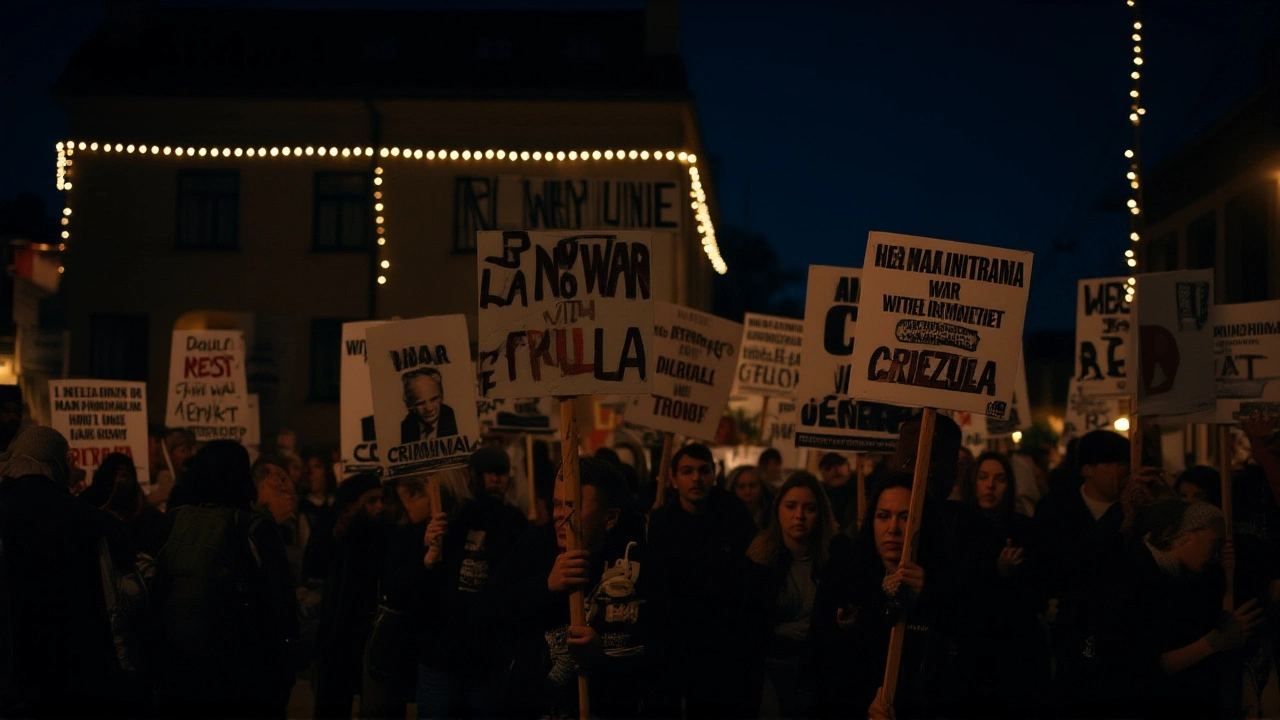
Meanwhile, back in the U.S., dissent is growing — but it’s fractured. Protests in Chicago, Atlanta, and Portland drew tens of thousands in October. But without unified leadership or legislative backing, they’ve stalled. The real power now lies not in rallies, but in the quiet decisions made in Brussels, London, and Berlin.
Why This Matters
This isn’t just about politics. It’s about identity. For 75 years, the world looked to America as the keeper of democratic values. Now, that mantle is slipping. And the countries stepping into the space aren’t seeking to replace the U.S. — they’re trying to preserve what the U.S. once stood for. Whether they succeed depends on whether they act before it’s too late.
Frequently Asked Questions
How has Europe responded to Trump’s democratic backsliding?
Europe has responded with quiet but decisive action: the EU launched a $1.2 billion Democratic Resilience Initiative, Germany funded independent journalism in Hungary and Poland, and France revived intelligence-sharing with Britain — all bypassing Washington. These aren’t symbolic gestures; they’re institutional shifts designed to fill the vacuum left by U.S. retreat.
Why is Britain’s shift significant?
Britain’s decision to stop automatically aligning with U.S. sanctions — and instead partner with the EU on law enforcement and data sharing — marks a historic pivot. After Brexit, many assumed the UK would cling to the U.S. as its sole ally. Now, it’s choosing multilateralism over loyalty to a fading superpower — signaling a new era in transatlantic relations.
What role did Jonathan Freedland and Susan Glasser play in shaping this narrative?
Freedland’s article in The New Yorker and his podcast interview with Glasser crystallized the global concern over Trump’s democratic erosion. Their analysis didn’t just report events — it framed them as a turning point, giving language to what many in Europe felt but couldn’t yet articulate. Their voices became reference points for policymakers.
Is this a permanent shift, or just temporary?
It’s too early to say. But the institutional changes — from NATO command structures to EU-UK data pacts — are hard to reverse. Even if Trump loses in 2028, the damage to U.S. credibility is deep. Europe and Britain aren’t just reacting; they’re building new networks that may outlast any single administration.
What’s the risk if Europe and Britain don’t act?
If they stay passive, authoritarian regimes — from Beijing to Moscow — will fill the void. Global norms on human rights, free press, and fair elections could collapse without U.S. leadership. The danger isn’t just losing influence — it’s losing the moral authority to defend democracy itself.
How does this affect ordinary citizens?
For Europeans and Britons, it means their governments are now on the front lines of defending values once assumed to be American. That could mean more funding for independent media, stronger protections for activists, and tougher rules on foreign interference. But it also means greater responsibility — and the risk of becoming targets for retaliation.


Danny Johnson
December 8, 2025 AT 09:08This is the kind of moment that defines generations. I’ve watched my grandparents live through the Cold War, and I never thought I’d see anything like this on home soil. But the quiet moves in Brussels and London? That’s not betrayal-it’s responsibility. We messed up. Now someone else is holding the flag. I’m not mad. I’m just… grateful they’re still standing.
Crystal Zárifa
December 10, 2025 AT 01:02They didn’t just leave the room-they turned off the lights and locked the door. Europe’s not stealing the spotlight. They’re just finally turning on their own lamps. Funny how the world only notices when the guy who always bragged about his flashlight stops working it.
Andrea Hierman
December 10, 2025 AT 12:49It is, indeed, profoundly disquieting to witness the dismantling of institutional guardrails that were once considered sacrosanct. One cannot help but reflect upon the erosion of norms-not merely as political transgressions, but as existential failures of civic imagination. The silence of institutions is not neutrality; it is complicity. And while Europe’s pragmatic recalibrations may appear opportunistic, they are, in truth, the only ethical response to moral abandonment. One must hope that this recalibration is not merely reactive, but generative.
Jullien Marie Plantinos
December 12, 2025 AT 03:22Oh please. Europe’s just jealous because we used to be the only superpower that could make bad decisions at scale. Now they want to be the ones making the bad decisions? Fine. Let them. But don’t pretend you’re saving democracy when you’re just trying to get your own tariffs passed. This whole thing is just woke imperialism with better coffee.
Serena May
December 13, 2025 AT 01:41They’re already spying on you. The EU-UK data pact? It’s a backdoor for mass surveillance. They’re using ‘democracy’ as a cover. You think they care about free press? They shut down dissent in France last month. 🤫
Sarah Day
December 13, 2025 AT 06:34My cousin in Berlin just texted me saying they’re teaching kids in school how to fact-check like it’s math class now. Kinda cool? Maybe we should’ve done that here too.
Jason Davis
December 14, 2025 AT 04:44Let’s be real-this ain’t about Trump. It’s about what happens when a nation forgets that democracy ain’t a brand, it’s a practice. And practices need daily upkeep. Like brushing your teeth. You don’t wait till your gums bleed to start. Europe’s just finally got the toothpaste. Meanwhile, we’re still arguing over whether the sink’s even real.
James Otundo
December 14, 2025 AT 08:30Oh wow, so now the French are moral arbiters? The same people who think baguettes are a human right? This isn’t a power shift-it’s a farce wrapped in a beret. And don’t get me started on Britain. After Brexit, they’re suddenly the voice of reason? Please. They still can’t figure out how to make tea without a PhD.
Christine Dick
December 14, 2025 AT 22:55How DARE they? How DARE Europe and Britain take advantage of America’s moment of weakness?! This is not realignment-it’s betrayal! We built the world order! We sacrificed blood and treasure! And now they’re rewriting history like it’s a Wikipedia edit war?! The moral decay is palpable, and it’s not just in Washington-it’s in every EU bureaucracy that dares to whisper, ‘We can do better.’ You think you’re noble? You’re just opportunists with better public relations.
Cheryl Jonah
December 16, 2025 AT 21:57None of this is real. The whole ‘democratic erosion’ thing? Deep state psyop. The FBI never stopped monitoring anyone. The archives? Just moved to a server in Nevada. The New Yorker? Owned by Soros. The ‘shift’? It’s all staged to make us panic so they can install global AI governance. You think Europe cares about you? They’re building the matrix. And you’re all just typing in the comments like sheep.