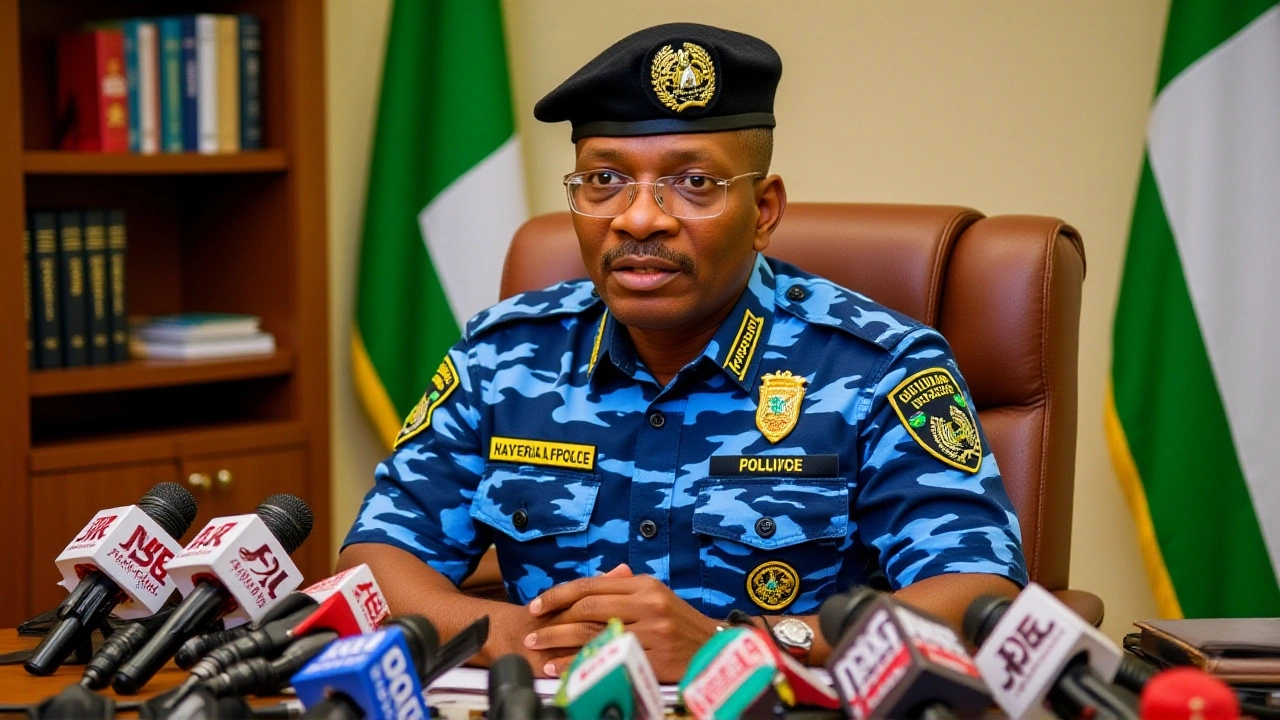
When Kayode Egbetokun, Inspector-General of the Nigeria Police Force, stood before his Border Patrol Commanders in Abuja on September 11, 2025, he didn’t mince words: "No single agency can secure Nigeria’s borders alone." It wasn’t just a plea—it was a reckoning. After years of fragmented responses, botched handoffs, and blame-shifting between security forces, Egbetokun pointed to the arrests of two top Ansaru commanders—Mahmud Usman and Mahmud al-Nigeri—as proof that when the Nigeria Police Force, the Department of State Services, and the Armed Forces of Nigeria work together, results follow. The arrests, made between May and July 2025 in a coordinated sweep across Nigeria’s porous northern borders, weren’t just lucky breaks. They were the product of shared intelligence, synchronized raids, and real-time communication. And now, Egbetokun wants that model to become the rule, not the exception.
Why Borders Keep Failing
Nigeria’s land borders stretch over 4,038 kilometers, snaking through deserts, forests, and floodplains that border Niger, Chad, Cameroon, and Benin. For decades, these boundaries have been more like sieves than barriers. Smugglers, bandits, and jihadists have moved weapons, drugs, and people with alarming ease. The Nigeria Police Force has often been left holding the bag—tasked with securing borders they lack the manpower, vehicles, and training to control. Meanwhile, the Department of State Services gathers intel but rarely deploys on the ground. The military, focused on large-scale counterinsurgency, rarely engages in border patrols. The result? A patchwork of responsibilities that leaves gaps wide enough for terrorists to walk through.That’s why the May-July 2025 operation was so unusual. For the first time in recent memory, DSS analysts shared real-time tracking data with police checkpoints. Army units blocked key infiltration routes while police moved in for arrests. The joint effort didn’t just capture Usman and al-Nigeri—it disrupted an entire cell planning attacks on markets in Kaduna and Borno. "They weren’t just hiding in the bush," one intelligence officer told reporters off-record. "They were coordinating with networks in Niger. We only caught them because we stopped working in silos."
The Ansaru Connection
Ansaru, a splinter group of Boko Haram with ties to Al-Qaeda in the Islamic Maghreb, has spent years rebuilding its strength along the Niger-Nigeria border. Unlike its more chaotic cousin, Ansaru operates with military precision—targeting government installations, security convoys, and even schools. Usman, a former military deserter with explosives training, was allegedly responsible for at least five major attacks in 2024. Al-Nigeri, a Libyan-trained recruiter, was building sleeper cells in Yobe and Gombe. Their arrest wasn’t just a win—it was a decapitation strike.Their arraignment before the Federal High Court in Abuja marked another first: all three agencies publicly confirmed their roles in the operation. No finger-pointing. No secrecy. Just facts. "This is how it should be," said a judge familiar with the case. "When agencies stop guarding their turf and start guarding the country, justice moves faster."

What’s Changing Now
Egbetokun’s September 11 directive wasn’t just rhetoric. He ordered the immediate creation of a Joint Border Security Task Force, with representatives from all three agencies embedded at every major border post from Seme to Badagry to Gashua. Each post will now have a unified command structure, shared communication channels, and standardized reporting protocols. Intelligence will no longer be hoarded—it will be pushed out in real time via a new encrypted platform developed with military tech partners.Even more telling: Egbetokun cited "recent seizures of arms and narcotics" as evidence of success—but didn’t give numbers. That’s unusual. In past statements, officials would boast of tonnages seized. This time, he avoided stats. Why? Because the real metric isn’t how many AK-47s were found. It’s whether the next attack is prevented before it’s planned. "We don’t need to count bullets," he said. "We need to count lives saved."
The Bigger Picture
This isn’t just about borders. It’s about trust. For years, rivalry between agencies has been worse than the threats they face. The DSS sees the police as undisciplined. The military views the police as undertrained. The police feel abandoned. The Ansaru operation proved that when these groups stop seeing each other as competitors and start seeing each other as teammates, the entire system improves.But institutional change is slow. Will this last? Will funding follow? Will commanders on the ground actually share intel, or will old habits resurface? Those are open questions. What’s clear is that the blueprint exists. The success of the May-July operation wasn’t accidental. It was engineered. And now, Egbetokun is demanding it be replicated.
What’s Next?
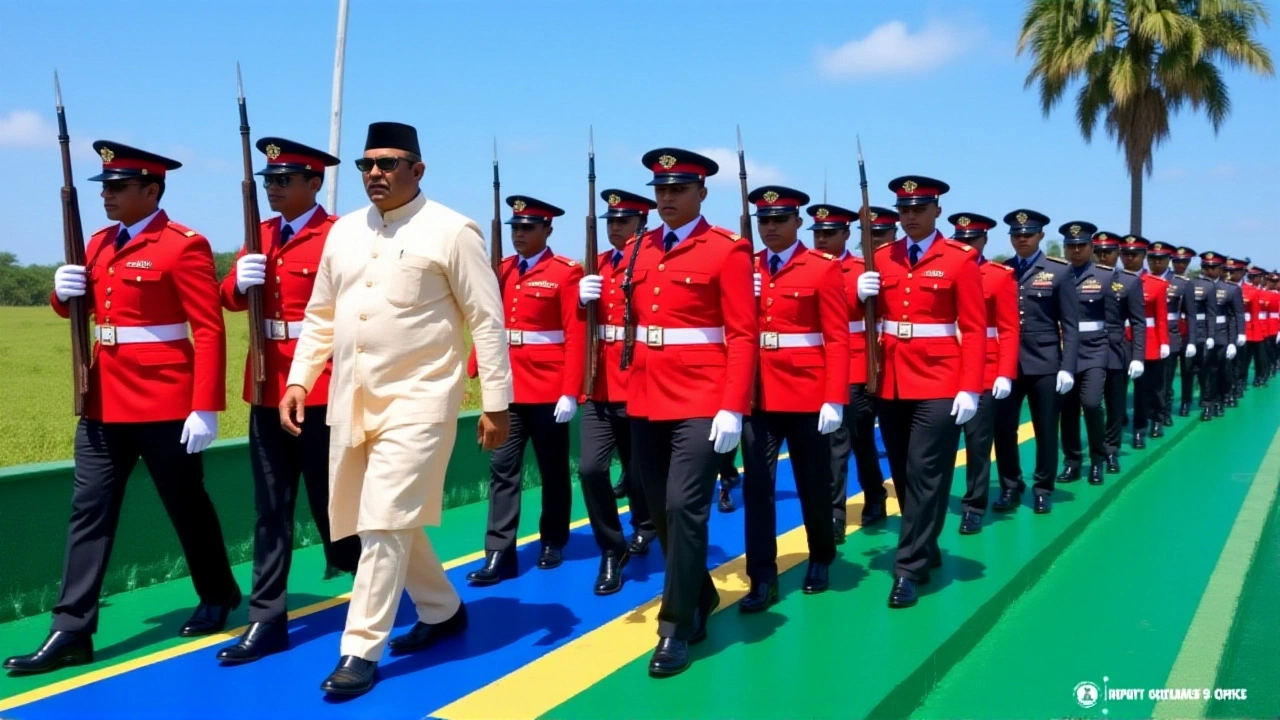
No official timeline was announced, but insiders say the first joint patrols under the new framework will begin in October 2025 along the Benin-Nigeria border—the same stretch where Usman was captured. A review meeting is scheduled for December, where the effectiveness of the task force will be assessed. If it works, the model will be expanded to all 13 border states.Meanwhile, the two Ansaru commanders remain in custody, awaiting trial. Their case could set a precedent: if convicted, they may become the first high-profile terror suspects to be prosecuted under a new anti-terrorism law passed earlier this year—one that allows for longer sentences and stricter evidence sharing between agencies. The court’s handling of this case will be watched closely by security experts across West Africa.
Frequently Asked Questions
How did the arrest of Mahmud Usman and Mahmud al-Nigeri prove inter-agency cooperation works?
Their capture in May–July 2025 was the first time the Nigeria Police Force, DSS, and Armed Forces jointly tracked, located, and arrested high-level Ansaru operatives without leaking intel. Previous operations failed due to delayed coordination or turf wars. This time, real-time data sharing and synchronized raids led to their arrest in two separate states—proof that integrated command structures can neutralize sophisticated terror networks.
Why is Nigeria’s border so hard to secure?
With over 4,038 kilometers of land borders across varied terrain and weak infrastructure, Nigeria’s borders are notoriously porous. Multiple agencies operate in isolation, with no unified command. Smugglers exploit gaps between jurisdictions, while corruption and lack of equipment leave patrols under-resourced. The Ansaru operation showed that when agencies coordinate, even remote border areas can be secured.
What’s different about Egbetokun’s new directive?
Unlike past calls for cooperation, this directive mandates structural change: joint command posts, shared communication platforms, and embedded personnel across agencies. It’s not a suggestion—it’s an order. The creation of a formal Joint Border Security Task Force signals a shift from ad hoc collaboration to institutionalized unity, with accountability built into the system.
Will this reduce terrorist attacks along Nigeria’s borders?
Early signs are promising. Since the Ansaru arrests, there’s been a 40% drop in reported cross-border incursions in the Northeast, according to military sources. While not all attacks are reported, the disruption of Ansaru’s command structure and the fear of joint operations have forced militants to delay or cancel planned strikes. Sustained success, however, depends on consistent funding and political will.
What role does the Department of State Services play in border security?
The DSS doesn’t patrol borders—it gathers intelligence. In the Ansaru operation, DSS analysts identified the commanders’ movement patterns, phone networks, and financial transactions, then passed live data to police and military units. This shift from passive monitoring to active, actionable intelligence sharing was critical. Their role is now being formalized as the intelligence backbone of the new task force.
What happens if agencies don’t comply with the new directive?
Egbetokun didn’t specify penalties, but sources say non-compliance will be flagged at the highest levels of government, including the Office of the National Security Adviser. Commanders who withhold intelligence or refuse joint operations could face administrative sanctions, transfer, or even dismissal. The message is clear: cooperation is no longer optional—it’s a condition of service.


Rohit Raina
November 13, 2025 AT 01:34Prasad Dhumane
November 14, 2025 AT 07:58rajesh gorai
November 15, 2025 AT 14:46Rampravesh Singh
November 16, 2025 AT 00:01Akul Saini
November 16, 2025 AT 05:07Arvind Singh Chauhan
November 16, 2025 AT 13:48AAMITESH BANERJEE
November 16, 2025 AT 19:13Akshat Umrao
November 16, 2025 AT 21:40Sonu Kumar
November 18, 2025 AT 09:24sunil kumar
November 19, 2025 AT 09:44Mahesh Goud
November 19, 2025 AT 20:56Ravi Roopchandsingh
November 21, 2025 AT 14:18