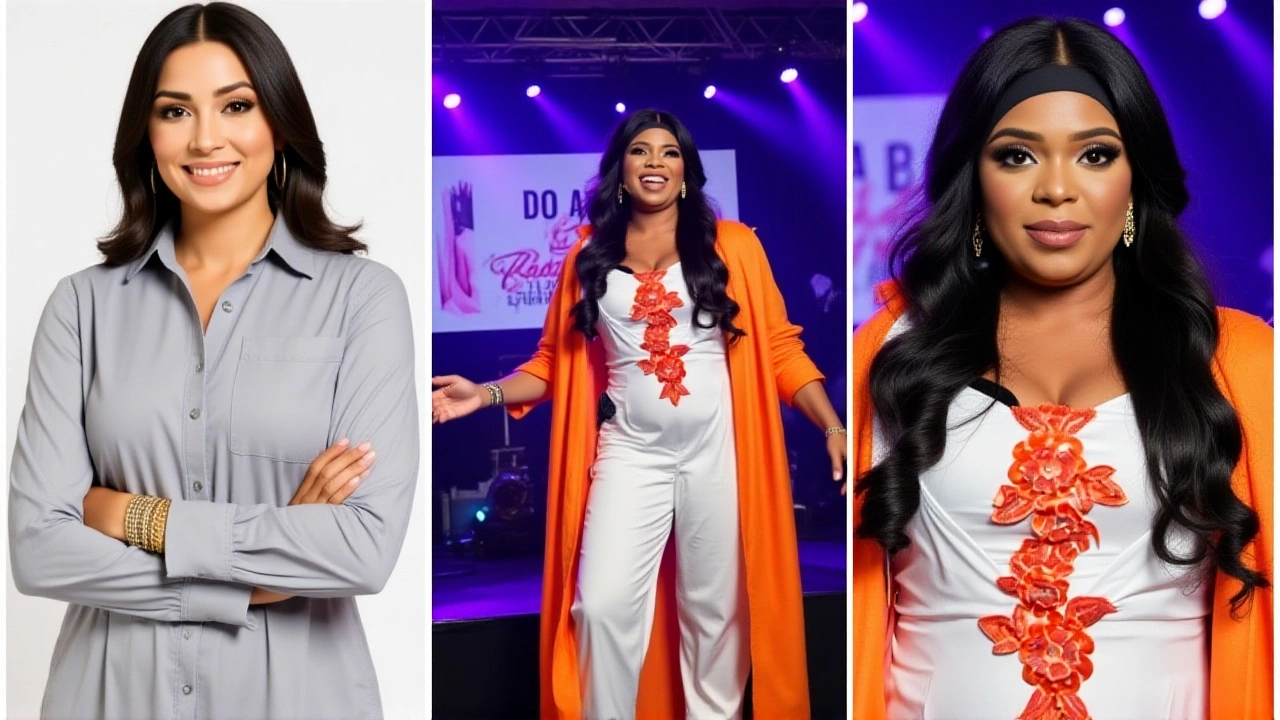
When Eniola Badmus, actress and Special Assistant to the Speaker of the House of Representatives openly mocked a colleague’s outfit on Instagram, few could have predicted the fallout would end in a heated standoff on a Lagos dance floor.
The spark ignited on April 13, 2025, at the Owambe Thieves premiereFilmhouse Circle Mall, Lagos. What should have been a celebration of Eniola Ajao's new movie turned into a dramatic showdown between two of Nollywood’s most talked‑about personalities.
Background of the Feud
Both women wear more than just designer gowns; they also carry political titles. Laide Bakare, actress and Senior Special Assistant on Entertainment to Osun State Governor Ademola Adeleke has been a fixture on red‑carpet events for years. Meanwhile, Badmus, who serves under Tajudeen Abass, the Speaker of the House of Representatives, has leveraged her federal appointment to boost her public profile.
Friends in the industry say the rivalry dates back to 2023, when Bakare launched a self‑help book titled *Grace & Glamour* and posted pictures of herself in a striking white dress paired with an orange cape. The ensemble quickly became an Instagram meme, but it was Badmus who turned the joke into a personal jab.
The Book Launch Spark
On a chilly evening in Abuja, Badmus posted a story asking, “Who among you wore Pastor Ajidara’s outfit?” The caption referenced a local pastor known for flamboyant robes, effectively dubbing Bakare’s look a fashion faux pas. Laide Bakare responded in the comments, defending her aesthetic and calling Badmus “petty.”
What followed were a series of private Direct Messages that leaked later. In screenshots shared on Instagram, Badmus wrote, “Don’t bring your terrible animalistic behaviour around me,” while accusing Bakare of posting a photo that “doesn’t look well.” The language was sharp, and the tone—uncharacteristically hostile for two women who had previously praised each other’s work.
Premiere Showdown
Fast forward to the night of the film’s debut. The venue was packed; influencers, actors, and even a few politicians filled the balcony. The headline act? A live performance by Fuji legend K1 De Ultimate, whose thumping beats set the scene for a night of celebration.
Mid‑song, Badmus spotted Bakare gliding onto the dance floor. According to video clips that went viral, Badmus’s expression shifted from joy to agitation within seconds. She leaned into the camera and said in Yoruba, “Don’t video us together, we’re not friends.” The comment, though short, sent a ripple through the crowd.
A brief but intense argument erupted over the booming music. Bakare asked, “Are you okay in your head?” Badmus shot back with a steely stare before turning away. A bouncer—identified by some attendees as security for the event—attempted to intervene, but the two women continued swapping barbed remarks for about a minute before the music swelled and the moment fizzled out.
By the time the night ended, the premiere’s publicity had shifted from the film’s plot to the headline‑making feud. Social media hashtags #BadmusVsBakare and #OwambeThievesDrama trended across Nigeria, with fans split down the middle.
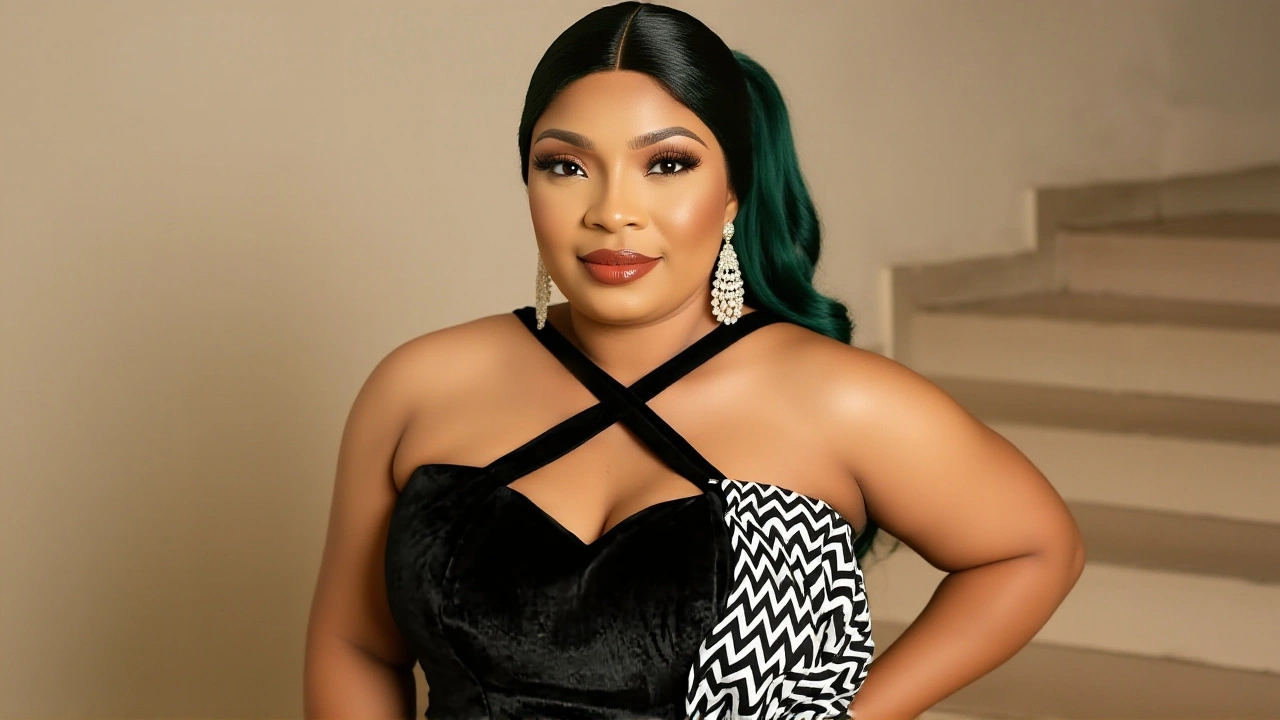
Industry Reactions
- Veteran director Kunle Afolayan posted, “We are here to celebrate art, not personal wars.”
- Entertainment blogger Tunde Ojo wrote, “The spectacle underscores a larger issue: when political power meets celebrity, tempers flare faster.”
- Fans of Bakare flooded Badmus’s Instagram with the phrase “Stay in your lane,” while Badmus’s supporters counter‑attacked with “Don’t let politics ruin the party.”
Even the House of Representatives issued a brief statement saying, “Our members are expected to maintain professionalism, especially in public settings.” The comment sparked debate about whether elected officials who double as entertainers should be held to a higher standard.
Political Angles and Public Perception
Both actresses occupy influential political posts, which adds a layer of complexity. Badmus’s role under Speaker Tajudeen Abass links her to federal legislative matters, while Bakare’s connection to Governor Ademola Adeleke ties her to state‑level cultural policy.
Political analysts argue that the feud could be leveraged by rival factions within Nigeria’s power structures. “When two public figures from opposite tiers of government clash, it often becomes a proxy battle for larger partisan disputes,” said Dr. Olumide Okonkwo, a professor of political communication at the University of Lagos.
Nevertheless, many ordinary Nigerians simply see it as entertainment gossip. A poll conducted by *The Punch* on April 20, 2025, found that 62% of respondents considered the incident “more drama than political relevance.”
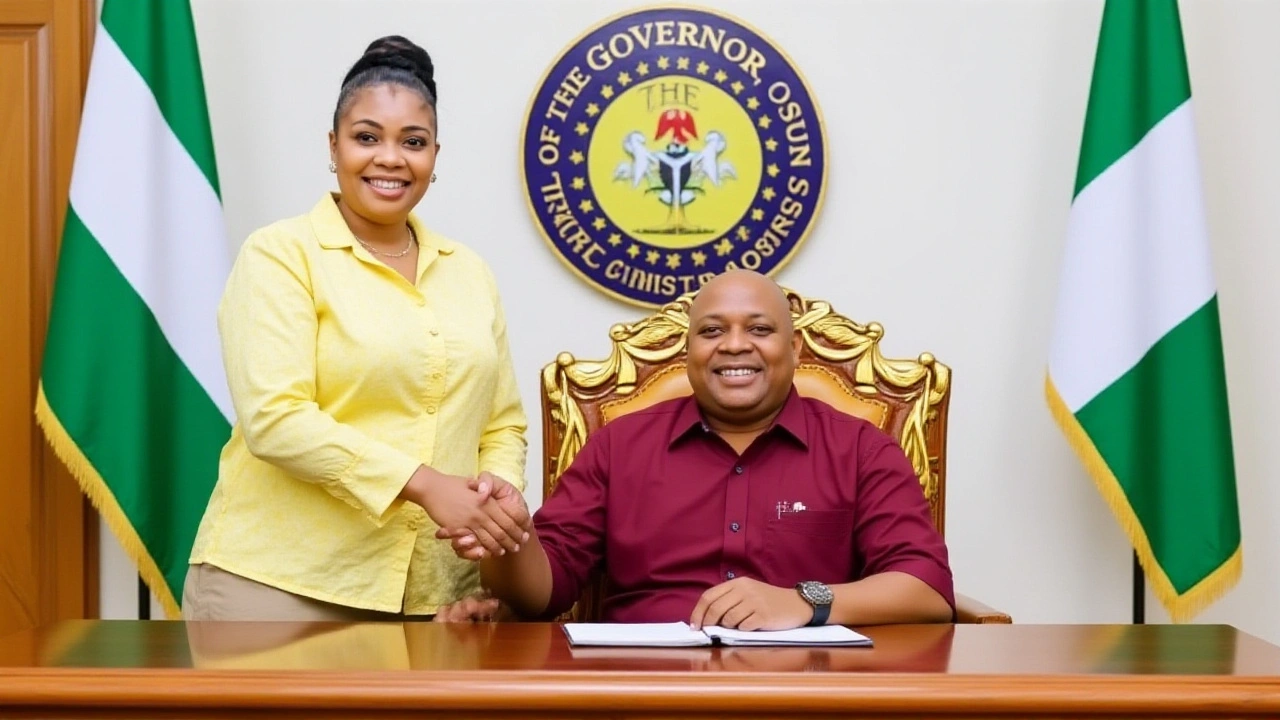
What Lies Ahead
Bakare has announced an upcoming Instagram Live series titled “Behind the Curtain,” where she plans to discuss mentorship in Nollywood and, subtly, the recent clash. Badmus, for her part, hinted at a new film project that “will speak louder than words.”
Whether the two will ever share a dance floor again remains uncertain. Some insiders believe a mediated reconciliation could be arranged at the next industry awards ceremony. Others suspect the rivalry might become a permanent subplot in Nigerian pop culture, feeding reality‑TV spin‑offs for years to come.
What’s clear is that this entertainment feud has reminded everyone that personal pride, social media amplification, and political clout can create a perfect storm—one that can turn a movie premiere into a headline‑making showdown.
Key Facts
- Date of incident: 13 April 2025
- Location: Filmhouse Circle Mall, Lagos
- Event: Premiere of *Owambe Thieves*
- Primary figures: Eniola Badmus and Laide Bakare
- Political ties: Badmus – Office of Speaker Tajudeen Abass; Bakare – Office of Governor Ademola Adeleke
Frequently Asked Questions
Why did the disagreement start over a book launch outfit?
Bakare’s white dress with an orange cape was widely shared online as part of her book promotion. Badmus, who follows a rival political figure, seized the moment to question the fashion choice, framing it as a joke that quickly turned personal.
How have their political roles influenced public reaction?
Because both women serve as special assistants to high‑ranking politicians—Badmus to Speaker Tajudeen Abass and Bakare to Governor Ademola Adeleke—their clash is viewed as more than celebrity gossip. Critics argue it reflects how political patronage can spill into entertainment, while supporters dismiss it as personal drama.
Did anyone intervene during the confrontation?
A security guard, identified by attendees as the event’s bouncer, tried to separate Badmus and Bakare, but the argument persisted for about a minute before the music overtook the tension.
What impact has the feud had on the film’s reception?
Box‑office reports show a modest uptick in ticket sales for *Owambe Thieves* in the first weekend, suggesting curiosity drove audiences. However, critics note that the movie’s reviews are now inseparable from the drama surrounding its premiere.
Is a reconciliation possible?
Industry insiders say a mediated meeting could happen at the upcoming Africa Magic Viewers’ Choice Awards, but both actresses have signaled they’re not ready to publicly bury the hatchet yet.


ritesh kumar
October 7, 2025 AT 02:48What we’re witnessing isn’t just celebrity drama; it’s a textbook case of political operatives weaponizing pop culture to distract from legislative back‑room deals. The Badmus‑Bakare flare‑up aligns perfectly with the timing of a contentious budget vote in Abuja, suggesting a coordinated narrative push. Both women sit on the same power grid – one under the Speaker, the other under a state governor – and their feud feeds the same echo‑chamber that fuels the ruling coalition’s agenda. When you strip away the Instagram filters, you see a deliberate attempt to mobilize their fanbases as proxy voters. In short, the drama is a smokescreen engineered by elite strategists.
Raja Rajan
October 14, 2025 AT 01:28Such conspiracies are often overblown.
Atish Gupta
October 21, 2025 AT 00:08Look, the media loves to amplify any spark into a wildfire, but we have to ask ourselves if the energy spent on this feud could be redirected toward collaborative storytelling in Nollywood. Both Badmus and Bakare have carved out substantial platforms that could champion emerging talent rather than entrenched rivalries. It’s a classic case of scapegoating personal grievances to mask systemic gaps in funding and mentorship. If the industry allowed these two power‑houses to co‑host a workshop, we might see a surge in authentic narratives that reflect everyday Lagos life. Let’s not forget that the real battle is against under‑representation, not each other.
Aanchal Talwar
October 27, 2025 AT 21:48I think it would be great if they could put aside the drama and maybe collaborate on a community project, like a film festival for young creators – that would really bring people together.
Ananth Mohan
November 3, 2025 AT 20:28We need more mentorship programmes that bridge the gap between political influence and artistic expression it could help upcoming actors learn how to navigate both worlds responsibly
Abhishek Agrawal
November 10, 2025 AT 19:08Honestly, while everyone is busy tweeting about the “clash”, we should be questioning why the House of Representatives feels the need to police a dance floor, why a governor’s aide is turning red‑carpet moments into political battlegrounds, and why the public consumes these spectacles as if they were reality TV, instead of demanding concrete policy discussions, which, frankly, would be far more beneficial.
bhavna bhedi
November 17, 2025 AT 17:48From a cultural standpoint, such incidents underscore the delicate balance between art and governance, reminding us that public figures must uphold decorum whilst celebrating creativity.
jyoti igobymyfirstname
November 24, 2025 AT 16:28OMG did you see that moment? It was like a real life soap opera on the dance floor lol can't believe they actually went at it!
Apu Mistry
December 1, 2025 AT 15:08There is a certain melancholy that pervades the modern spectacle of fame, a silence that whispers from the shadows of every spotlight. When two public servants indulge in petty theatrics, it is not merely a collision of egos but a reflection of a deeper societal malaise. The audience, ever hungry for drama, drinks the narrative like cheap wine, unaware that the grapes were harvested from fields of political expediency. Each jab, each raised eyebrow, becomes a micro‑cosm of the larger power structures that orchestrate our daily discourse. One might argue that the very act of broadcasting such a dispute serves as a conduit for the masses to project their own frustrations onto the elite. Yet, in doing so, the elite also reaffirms their dominion by turning personal strife into public consumption. The choreography of the confrontation, set to the thrum of K1 De Ultimate’s beats, mirrors the rhythm of a nation beating under the weight of unfulfilled promises. Moreover, the linguistic choice of “don’t video us together” is a paradoxical plea for invisibility within an age of relentless documentation. It is as if they wish to escape the gaze of the digital panopticon while simultaneously feeding it. The political titles they bear merely add layers of irony, as the very institutions they represent are plagued by the same discord they exhibit on stage. This incident, therefore, is not an isolated blot but a symptom of a systemic fissure. It underscores how political capital can be weaponized to amplify personal vendettas, turning cultural events into arenas of ideological conflict. In the grand tapestry of Nigerian media, this thread will likely be woven into future narratives, perhaps even spawning reality‑TV spin‑offs that profit from dissent. The ultimate irony lies in the fact that the public, yearning for authenticity, is presented with a fabricated authenticity, a staged authenticity that masquerades as reality. We must ask ourselves whether the culture of spectacle erodes the very foundations of democratic discourse. In the end, perhaps the most profound lesson is that the dance floor, much like the corridors of power, is a space where performance often eclipses substance, leaving us to wonder what truly matters beneath the glitter.
Rajnish Swaroop Azad
December 8, 2025 AT 13:48The drama itself becomes the philosophy.
Gurjeet Chhabra
December 15, 2025 AT 12:28It’s interesting how a single event can spark so many conversations about art and politics.
Ashutosh Kumar
December 22, 2025 AT 11:08Enough of the calm talk – this feud proves that power players will clash whenever the spotlight hits, and there’s nothing wrong with enjoying the fireworks.
Neha Shetty
December 29, 2025 AT 09:48While the fireworks are thrilling, let’s also remember that constructive dialogue can light the way forward, turning sparks into lasting change.